Multi-billion-dollar announcements for semiconductor fabrication plants in Tamil Nadu, Gujarat, Assam, and Odisha regularly capture national headlines. Public attention stays fixed on sprawling cleanrooms, brick-and-mortar factories, and shiny silicon wafers. Yet, beneath the surface of India’s semiconductor push lies an unaddressed reality: virtually all the ultra-complex machines that make those chips are imported from foreign monopolies.
While setting up local fabrication plants (fabs) gives India a foothold in assembly and production, true technological self-reliance requires mastering the machinery inside those fabs. In a quiet shift across engineering hubs like Bengaluru and Chennai to Thiruvananthapuram, Indian deep-tech engineers are writing the control software, yield-management intelligence, and operational systems that power semiconductor tools used in global fabs from South Korea to China.
The global chip shortage during the COVID-19 pandemic revealed a critical vulnerability. India, despite its massive market for automotive, medical equipment, defense machinery, and consumer electronics, was entirely dependent on East Asian and US supply chains. Semiconductor manufacturing is no longer just an industrial goal; it is a matter of economic security and defense readiness. Governments worldwide have recognized this shift, prompting India’s policy frameworks, including the India Semiconductor Mission (ISM) and its evolving iterations, to subsidize local fab setup. Major domestic and global names like Tata and Micron are now establishing facilities in states like Gujarat, Odisha, and Assam.
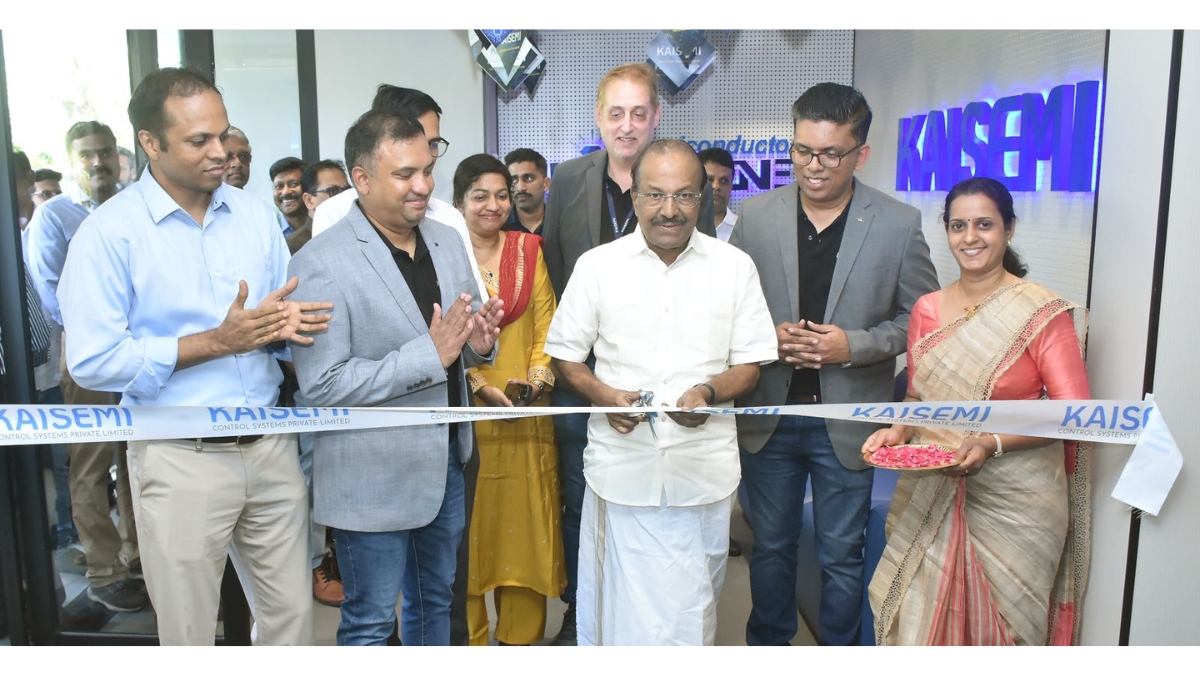
Yet, setting up fabs and cleanrooms is only half the battle. “Even now, almost 80 percent of the machinery and specialized equipment used in these fabs must be imported,” explains Tony Joseph, Director at KaiSemi Control Systems, a deep-tech firm that develops control systems for high-end semiconductor manufacturing equipment. Machine development has not fully taken off in India yet; while basic machinery can be manufactured domestically in the near future, building complex tools like ion implanters or advanced lithography machines requires specialized technical know-how that takes decades to develop. KaiSemi Syndication Article
The global semiconductor machine industry is characterized by high capital intensity and extreme concentration. While fields like artificial intelligence attract thousands of companies, equipment manufacturing is governed by a small circle of global players. Netherlands-based ASML holds a virtual monopoly on advanced lithography machines required for the thinnest nanometer chips.
Similarly, specialized tools like ion implanters, essential for altering electrical properties in silicon wafers, are produced by only three or four global firms, including Applied Materials and Axcelis in the US, Kingstone Semiconductor in China, and new initiatives by Ninebell in South Korea.
This concentration makes acquiring machine technology challenging, as global order books are pre-booked years in advance by fab giants like TSMC, Samsung Electronics, SK Hynix, and Intel, all based outside of India in Taiwan, South Korea, and the US. For a rising semiconductor nation, breaking into this equipment loop requires a different entry point: software and control system engineering.
Where hardware manufacturing faces high barriers, Indian software engineering provides a bridge. Control systems serve as the operational brains of chip-making equipment, managing parameter adjustments, power variations, component calibrations, and diagnostic validation in real time.
Firms like KaiSemi specialize in developing control system architecture for international equipment manufacturers across East Asia. Because their engineers work directly on configuring ion implanters and validating machine components in the field, they possess an intimate, inside-out understanding of how these complex systems function.
This technical expertise represents a crucial stepping stone. As multinational equipment suppliers establish large-scale R&D and engineering footprints in India, such as KLA Tencor’s major R&D facility near Chennai—local engineers gain practical exposure to machine design, equipment validation, and advanced cleanroom protocols. Over time, this knowledge base creates the foundation required for India to evolve from writing control software to manufacturing its own indigenous equipment.
Reaching India’s target of capturing a significant share of the global semiconductor market will require a phased approach. Rather than attempting to immediately produce nano-sized chips, the immediate opportunity lies in high-volume, mature node chips. KaiSemi Syndication Article
Evolution in this sector occurs step-by-step, with the immediate focus centering on high-volume chips that India needs most right now; such as those used in automobiles, medical equipment, power electronics, and everyday appliances. Reaching self-reliance in those segments over a 3-to-5-year horizon presents a practical path forward.
Achieving broader self-reliance will also depend on talent retention. Historically, top Indian semiconductor engineers moved abroad to work in foreign fabs and equipment hubs. Following models used by other Asian semiconductor ecosystems over past decades, policy support that encourages seasoned talent to return and build local startups will be critical.
Supported by favorable diplomatic relations, strong power and water infrastructure, and targeted capital support for equipment R&D under updated government schemes, India is establishing a long-term foundation. While building domestic hardware capabilities will take time, the software intelligence driving those machines is already taking root. KaiSemi Syndication Article