ORSL’s subsidiary has now won fourlarge-scale orders from BPCL contracts in a month.
India’s compressed biogas (CBG) industry is still in the early stages of a large, government-backed build-out. The SATAT programme has driven more than 1,200 letters of intent for new CBG plants as of mid-2026, envisioning a sector that scales to several thousand facilities nationally — leaving a substantial pipeline of projects still to be engineered, constructed and commissioned in the years ahead.
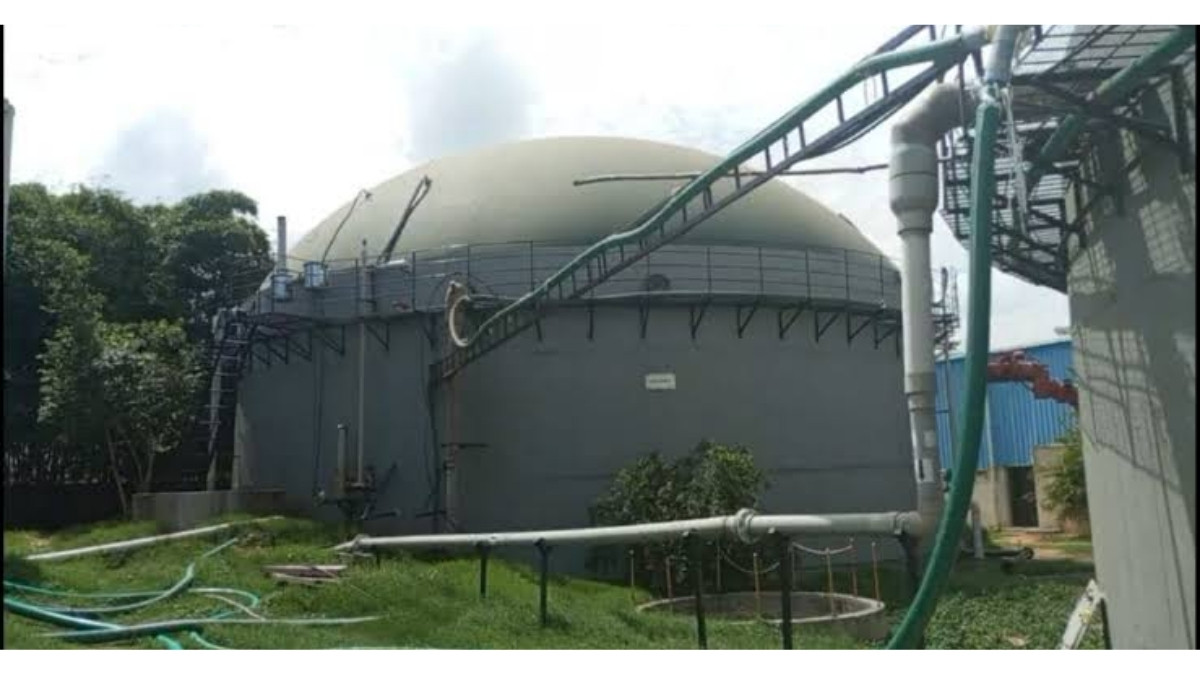
Against that backdrop, Solapur Bioenergy Systems Private Limited (SBESPL), a wholly owned subsidiary of Organic Recycling Systems Limited (ORSL, BSE: 543997), has won a fourth Large-scale order for Engineering, Procurement, Construction, Operation and Maintenance (EPCOM) contracts from Bharat Petroleum Corporation Limited (BPCL) — for organic municipal solid waste-based CBG plants in Mysuru, Karnataka; Raipur, Chhattisgarh; Kozhikode, Kerala; and Hubli, Karnataka adding up to roughly 20 TPD of aggregate CBG processing capacity.
The policy backdrop has shifted in the sector’s favour through 2026: a mandatory CBG blending obligation now scales from 1% to 5% by FY29, the Union Budget 2026-27 introduced an excise duty exemption on the biogas portion of blended CNG, and the Ministry of New and Renewable Energy offers central financial assistance of up to ₹10 crore per plant. Oil marketing companies including BPCL, IOCL and HPCL typically back CBG plants with 15-year offtake agreements once commissioned.
*Order Classification:
| Classifications | Big-scale order | Large-scale order | Major-Scale orders |
| Value (INR Cr) | Up to Rs. 50 Crore | Rs. 50-100 Crore | Rs. 100 Cr and Above |
Pankaj Tanwar, CEO – Bioenergy, Organic Recycling Systems Limited, said:
“India’s CBG sector needs more plants on the ground, not just more letters of intent, and these four BPCL awards are about converting that opportunity into commissioned capacity. Each project takes us through the full lifecycle, from engineering and construction to five years of operations and maintenance, which is exactly the kind of accountability the sector needs from its developers. As government schemes like SATAT and GOBARdhan continue to support the industry, we see a significant opportunity for companies with proven execution capability to scale alongside it.”
One reason the gap between letters of intent and commissioned plants has stayed wide, according to industry participants, is that many early awards were structured as pure construction contracts, leaving plant operations to a separate, often smaller entity without the balance sheet or technical depth to run them. BPCL’s EPCOM structure folds construction and five years of operations and maintenance into a single contract with a single counterparty, shifting more execution and operating risk onto companies like SBESPL — but also removing the handoff at the point many projects appear to stall.
Jigar Gudka, Chief Financial Officer, Organic Recycling Systems Limited, said: “The EPCOM structure is deliberately different from a plain-vanilla EPC contract. Once these plants move into their five-year O&M phase, that revenue is contracted and annuity-like, rather than tied to the ups and downs of a single construction cycle. As more of our portfolio shifts from build to operate, we expect that to translate into materially better EBITDA visibility — which matters in a sector where a lot of capacity is still stuck between LOI and commissioning.”
ORSL has also recently secured a renewal of its O&M contract for a separate CBG plant in Gorakhpur with IOCL, giving it operating relationships with two of India’s largest state oil marketing companies. The company’s scale remains modest relative to the sector’s national ambitions — its four new BPCL plants add under 20 TPD against a shortfall running into the thousands — but the wins illustrate which companies are actually converting India’s CBG pipeline from paper commitments into commissioned capacity.